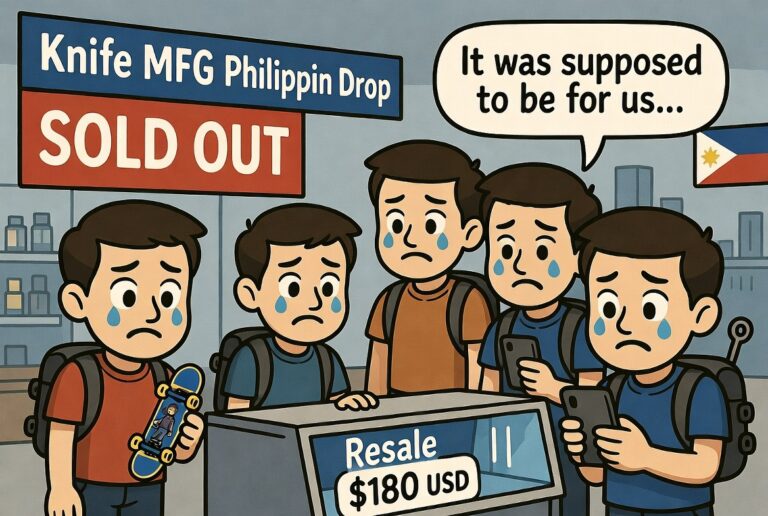
Knife MFG Co, the Chicago-based fingerboard company known for its limited drops of high-quality 5-ply Canadian maple decks (“fingerboarding for the freaks”), partnered with Vector Fingerboard Shop in the Philippines for a special Philippines-only release of Lot #025 on May 22, 2025, at 5 PM PHT.
Priced at ₱3,150 (roughly $55 USD at the time), the decks came individually wrapped and boxed with free Vector stickers (foamtape not included). This was the last batch using the C2 mold, featuring 5 shapes — KH1 32mm, KS1 33mm, KB1 33.5mm, KL1 34mm, KC2 36mm — tailored to pro riders, with 12 graphic options distributed across them.
A follow-up smaller drop of 7 decks happened around May 25. The intent seemed positive: give Asian (specifically Filipino) riders better access to hyped boards without competing in global drops, which often sell out in seconds.
The Problems: Botting, Scalping, and Perceived Fixing
The drop quickly soured. Reports and community sentiment indicate that a significant portion of the stock was scooped up rapidly — likely by bots, coordinated groups, or insiders — rather than reaching everyday local riders. Much of this stock then resurfaced on resale markets, often shipped back to the US or sold internationally at massive markups (common for Knife decks: retail ~$48, resale frequently $150–$190+).
This fueled accusations that the drop was “fixed” or not truly fair, with benefits flowing to resellers instead of the Philippine fingerboard community it was meant to serve. Ill will grew toward both Knife and the local shop, as riders felt shut out of a “home” drop. Similar frustrations appear in Knife’s broader drops, where fast sell-outs and high resale frustrate genuine collectors and riders.
Fakes and Market Flooding
Compounding the issue, boards from this (and similar) drops have been copied and sold as fakes, often around the $200 price point. Knife has publicly warned about counterfeit decks circulating in the second-hand market.
This erodes trust: buyers risk overpaying for replicas, while the brand’s reputation for quality takes a hit when fakes underperform or flood the market.
Broader Context on Knife MFG
What they’re doing right
- Knife produces well-regarded pro-model decks with specific molds and shapes valued by serious fingerboarders.
- Limited drops create hype and community excitement — full-length videos, pro support, and genuine collector culture.
- Regional drops like the Philippines one show efforts to expand access beyond the US and Europe.
Ongoing challenges
- Chronic supply vs. demand problems — drops sell out instantly, fueling a strong secondary market and scalping.
- High resale prices alienate core riders who just want to ride.
- Counterfeiting is an emerging problem for popular brands like Knife.
- Community complaints about “grail” chasing and frustration with bots and insiders.
The Takeaway
What started as a nice idea to support Filipino riders and build regional presence has, unfortunately, highlighted deeper issues in the fingerboard scene: limited production, scalping, and the challenges of fair distribution in a hyped, low-supply hobby. Instead of strengthening the brand’s image in Asia, it seems to have amplified existing gripes about accessibility and fairness.
For Knife, this serves as a cautionary tale. Raising retail prices (as some fans suggest) might curb some reselling but could price out younger and local riders. More transparent allocation, anti-bot measures, or larger regional runs could help. As it stands, the Philippines drop joins a pattern where good intentions meet the harsh realities of hype culture — leaving many riders frustrated and the brand with some reputational damage.
If you’re a rider affected or have more details from the drop, feel free to share in the comments for a more complete picture.